
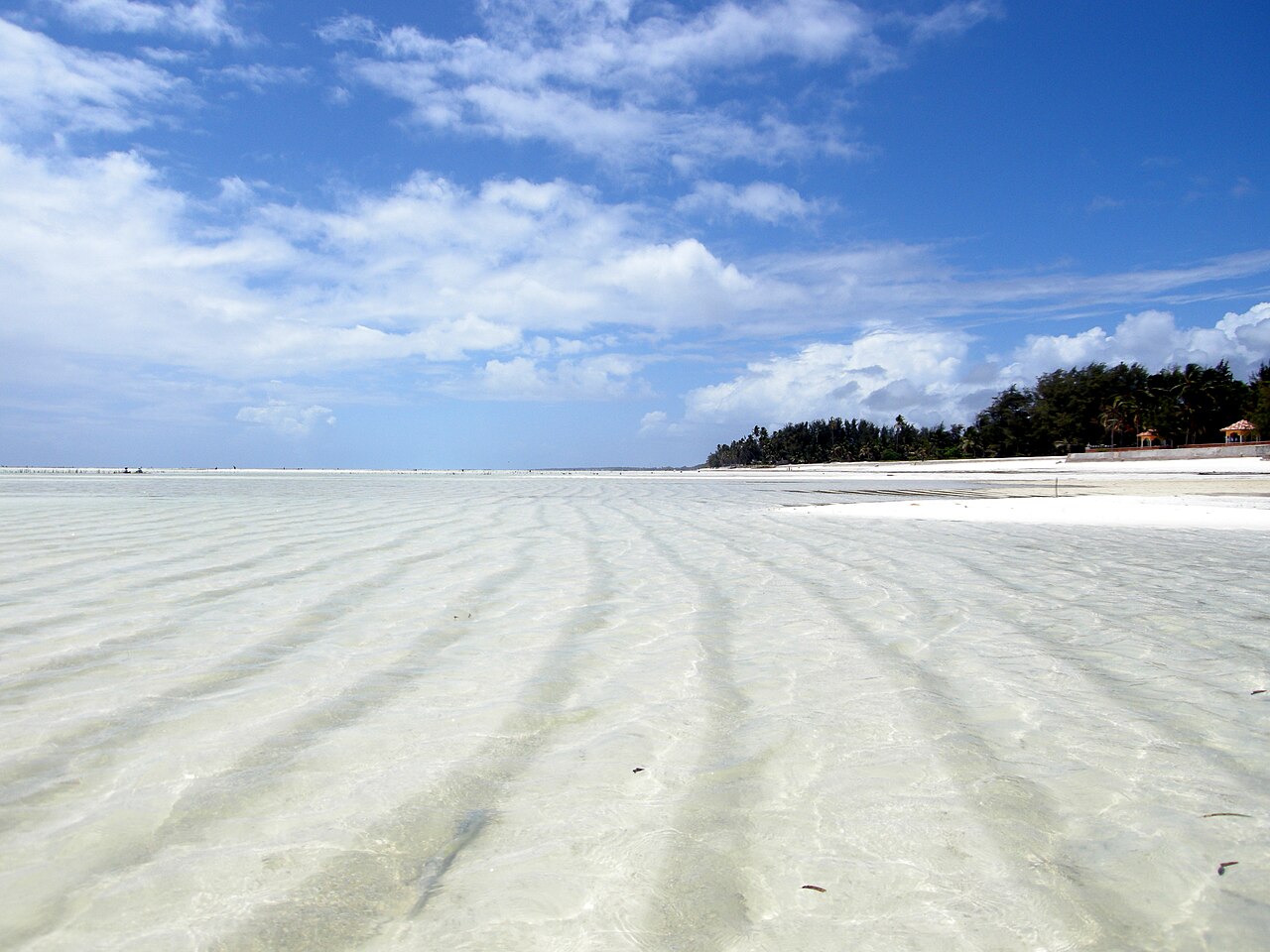
Zanzibar's tides are easiest to notice on the east coast. At low tide, the sea can retreat across a broad, shallow lagoon, leaving a long walk between your hotel and deeper water. On the north and north-west coasts, beaches such as Nungwi and Kendwa are often more convenient for a spontaneous swim. Neither pattern is identical at every hotel or every hour.
Tides are driven mainly by the moon's gravitational pull, with the sun also playing a role. The US National Ocean Service explains why tidal timing changes from day to day. That is why last week's perfect morning swim is not a permanent daily appointment. Use a local tide prediction for your exact dates and ask your hotel about its stretch of shore.
Why do tides matter so much in Zanzibar?
The shape of the coast changes how noticeable the water movement feels. Shallow flats and reef-protected lagoons can leave a large area exposed at low tide. A photograph taken at high tide may show turquoise water beside the hotel; a low-tide photograph of the same place can show sand, pools and people walking towards the horizon. Both are real. Neither tells the whole day's story.
Low tide is not a flaw. It can be a lovely time for a beach walk and a chance to see more of the coast. But if your definition of a holiday is “open the door and swim whenever I like”, it affects which coast to choose. The Zanzibar beach guide compares the main areas in more detail.
Paje, Jambiani and the east coast
On many east-coast beaches, including Paje and Jambiani, the low-tide retreat is part of daily life. The lagoon may become shallow and some swimming spots move farther away. That makes the coast good for long walks, but it may frustrate someone expecting deep water beside a lounger all day. A hotel pool becomes more useful here than its listing might suggest.
Paje is popular for kitesurfing, but conditions depend on wind, tide, the school and your skill level. Do not assume every hour is suitable for a lesson. Matemwe and other north-east areas also have changing lagoon conditions. Ask a boat operator where it departs and whether the trip timing shifts with the tide.
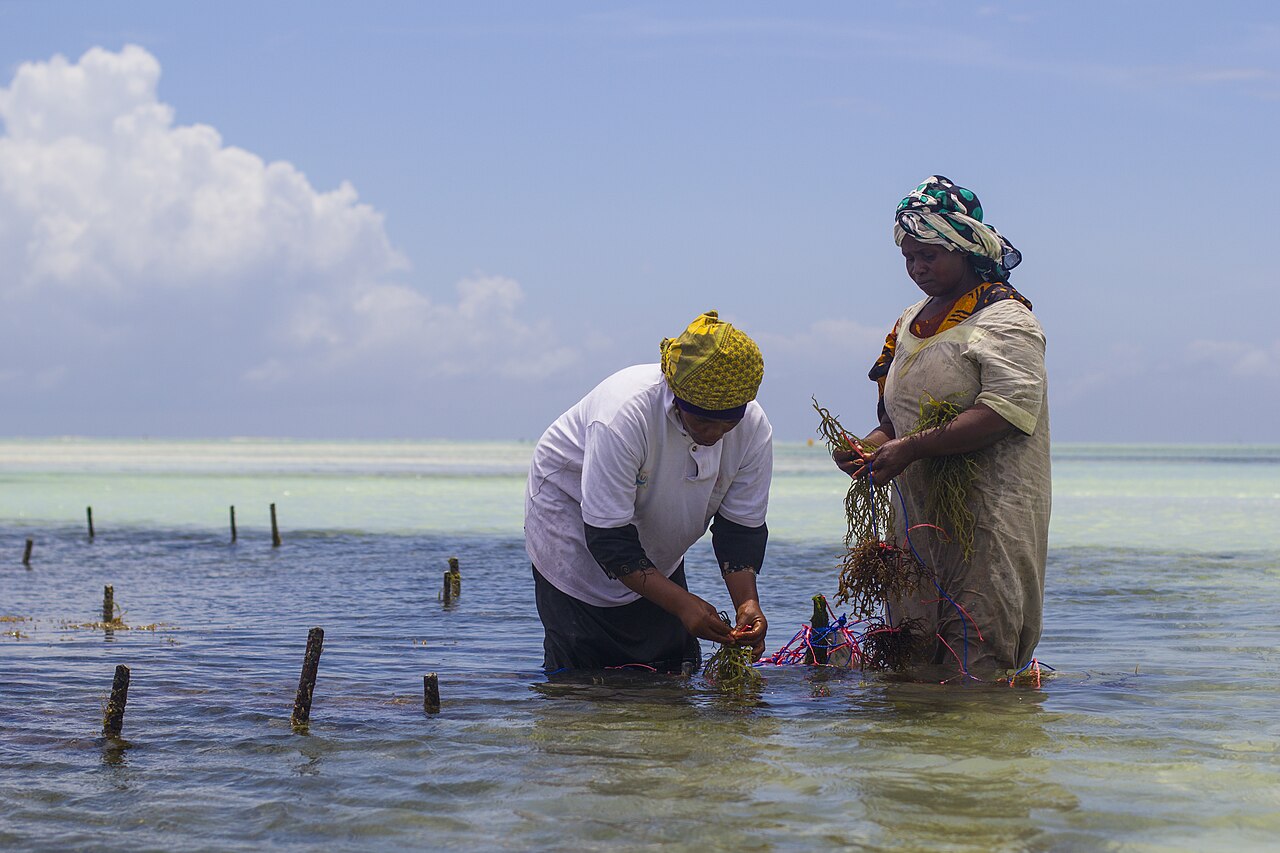
At low tide, local people may work in the shallows, including seaweed farming. These are workplaces, not a resort activity display. Give people space and ask before taking photos.
What about Nungwi and Kendwa?
Nungwi and Kendwa on the northern and north-western coast are often easier choices when swimming is the priority. The water is generally more accessible through the day than on the broad east-coast flats. That does not mean there is no tide, no currents or a guarantee of safe water everywhere. Conditions vary along a beach and after weather changes.
Kendwa is a strong starting point for travellers who want beach time with less planning around low tide. Nungwi adds a busier restaurant and boat-trip scene. Before paying for a “beachfront” room, read recent reviews about the exact section of beach, access at different tide levels and any rocks or boats nearby.
How do you use a Zanzibar tide table?
- Choose the date and location. A general Zanzibar listing may use a reference station that is not your beach.
- Check the time zone. Make sure the table shows local Tanzanian time.
- Look for both high and low tide. The sea changes between them, not only at the marked minute.
- Ask locally. Hotel staff or a qualified boat operator can explain access at your exact shore.
- Check weather and sea state. A tide table does not predict every current, wave or storm.
Do not plan the entire week around a single screenshot. Tidal times shift and activities may be moved for weather. If a snorkelling company offers a departure time, ask why it suits the sea conditions that day.
Is it safe to swim at low tide?
“Low tide” is not a safety rating. Shallow water can have rocks, sea urchins or channels, and rising water can change the return walk. Currents and visibility also vary. Swim where local guidance says it is suitable, watch children closely and ask a qualified operator before entering unfamiliar water. Do not walk far across exposed flats without understanding the return route and timing.
For boat trips, use an operator who adjusts to conditions rather than one who insists the sea will behave because a booking page says so. Our Zanzibar tours guide helps you compare what trips include, but the day's safety decision belongs to the local crew.
Which Zanzibar beach should you book?
Choose Nungwi or Kendwa if easy access to swimming is central to your plans. Choose Paje or Jambiani if you like long walks, kite culture or a quieter east-coast rhythm and do not mind planning swims around the water. Choose a hotel for its whole location and facilities, not just the colour of the water in one photo.
If you are splitting a week between Stone Town and the beach, one coast is usually enough. See the seven-day itinerary for a route with time to enjoy it. Tides are part of the island, not a problem to outsmart. Just know which version of the beach you are booking.
Frequently asked questions
Which Zanzibar beaches have less noticeable tides for swimming?
Nungwi and Kendwa are often easier for flexible swimming than the broad east-coast lagoons. Check conditions at the exact beach before entering.
Can you swim at Paje at low tide?
The water can retreat far across shallow flats, so a quick swim beside the hotel may not be practical. Ask locally about safe swimming spots and the day’s tide.
Does Jambiani have strong tides?
The tide is clearly visible along much of Jambiani’s shallow coast. It creates good walking conditions but can limit easy swimming at low tide.
What time is high tide in Zanzibar?
There is no fixed daily time. Check a current local tide table for your beach and dates; the timing changes from day to day.
Is Kendwa good for swimming at low tide?
Kendwa is generally more convenient for swimming across the day than many east-coast beaches, but local sea conditions still need checking.
Do Zanzibar tides affect snorkelling trips?
They can affect departure points, access and sea conditions. Follow the boat operator’s current advice and check what happens if a trip must move.
Is it safe to walk out at low tide?
Not automatically. Rocks, channels, rising water and currents can create risks. Ask locals about the route and return time before walking far out.