
For a Tanzania safari, wear comfortable layers, closed shoes and a hat. Bring a warm top for early starts and a light layer you can remove later. Neutral colours are practical, but you do not need to buy a matching khaki wardrobe. The zebra will not be checking your outfit.
What you need depends on your route, season and activities. A game drive in a vehicle is different from a guided walking safari, and a highland morning near Ngorongoro may feel different from a sunny afternoon lower down. Check the operator's activity rules and current weather before packing. Our season guide helps you place the trip in context.
What should you wear on a Tanzania safari?
Start with breathable trousers or shorts, a comfortable shirt, a fleece or light warm layer, a compact rain jacket and closed shoes. A brimmed hat, sunglasses and sun protection are useful in the vehicle and at camp. Choose clothes you can sit in for several hours. That sounds obvious until you spend a bumpy afternoon wearing the trousers you only tested while standing.
For lodge dinners, most safari settings are relaxed. Check if your particular lodge has a dress code, but do not let evening clothes crowd out the practical items. If your trip continues to Zanzibar, you can pack separate beachwear without wearing it on the game drive.
Dress for the whole game-drive day
Early departures can feel cool, especially in an open vehicle or at higher elevation. A layer you can pull over your shirt is more useful than guessing the day's final temperature from your hotel room. By midday you may be warm and glad you can remove it. A scarf or buff can help with dust on dry roads, but it is not a substitute for sun protection.
Keep one small bag in the vehicle with water, sunglasses, a warm layer and rain protection. Do not bury everything in luggage that stays at camp. If you are taking a domestic flight, ask about baggage weight and soft-bag rules before buying a large case. Your safari vehicle does not have an infinite boot either.
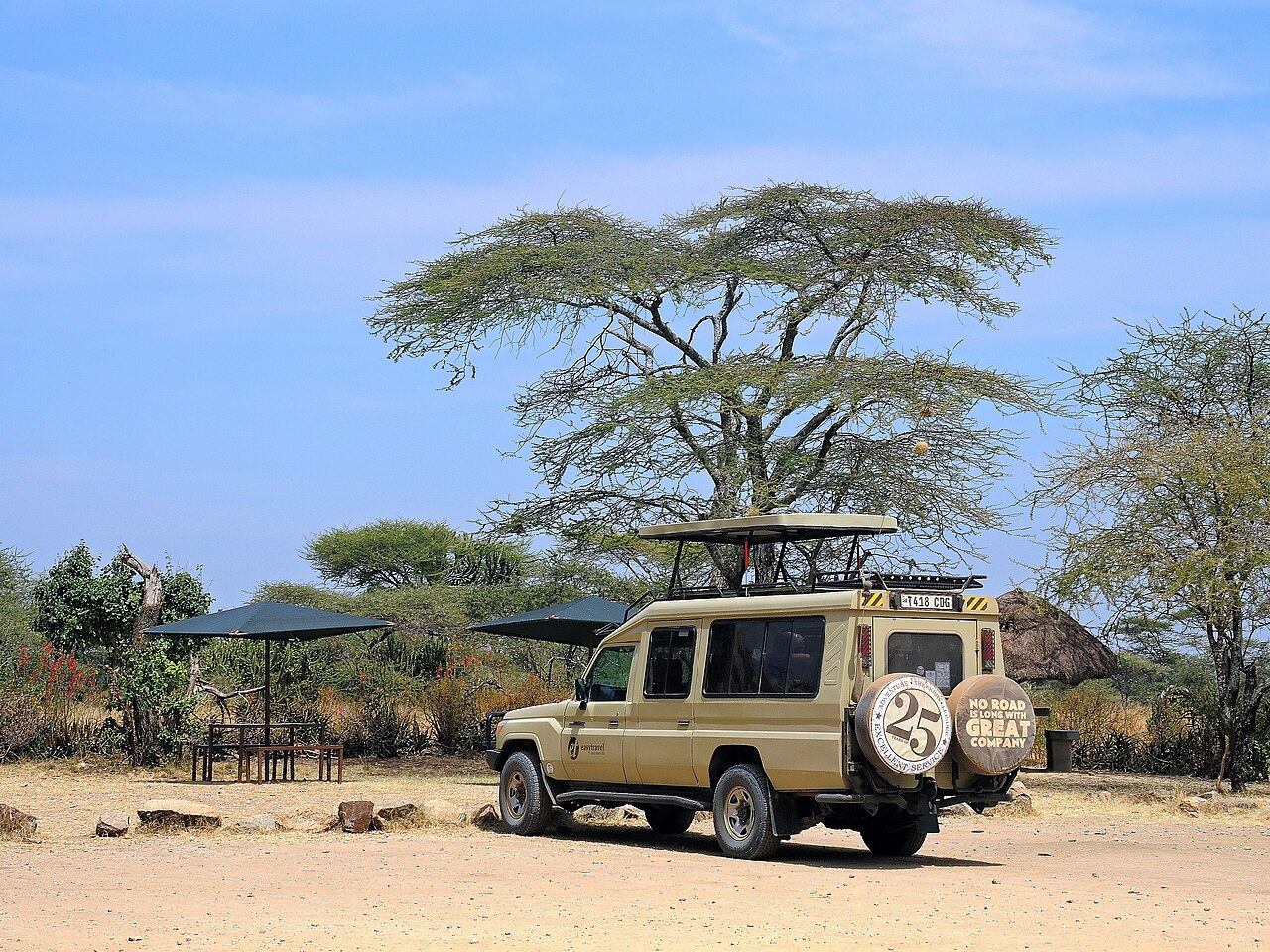
Roads, vehicle design and weather vary. An enclosed vehicle with a pop-up roof feels different from an open-sided vehicle at dawn. Ask what your operator uses and whether blankets or ponchos are provided.
Do safari clothes have to be khaki?
No. Muted earth tones are versatile because they show dust less readily and do not dominate photographs. Grey, olive, beige and other calm colours are fine for many game drives. More important is comfort, fit and fabric that dries reasonably quickly. Bright white looks lovely for five minutes and then meets a dusty seat.
Do not rely on broad internet rules about a single forbidden colour. Some operators set dress guidance for specific activities, so follow their instructions for a walking safari or conservation area. Avoid wearing camouflage if local rules or operators advise against it. When in doubt, ask the guide rather than buying a whole new wardrobe.
Which shoes and accessories matter?
For ordinary vehicle safaris, comfortable closed trainers or light walking shoes are usually more useful than heavy mountaineering boots. If you have a guided walk, ask the operator what footwear it requires. Sandals are pleasant around a lodge but less practical when you step onto rough ground or dusty paths.
Take a sunhat that stays on in a breeze, sunglasses and whatever sun protection suits you. A light long-sleeved shirt can offer sun and insect coverage without feeling too hot. If you use insect repellent, follow the product instructions and local health advice. A small torch and spare charging method can be handy in camps.
How do the seasons change the packing list?
During wetter periods, prioritise a proper rain layer and a way to keep dry clothes dry. In drier months, dust and sun may be more noticeable, while mornings can still be cool. Tanzania has different elevations and climates, so a national average temperature is not a packing plan.
Check the exact places on your route: Serengeti, Ngorongoro and Zanzibar will not all feel the same. The Tanzania Meteorological Authority offers current weather information. Ask your lodge about laundry if you are travelling for more than a few days. Rewearing practical clothes is easier than hauling seven near-identical outfits across the country.
A simple safari clothing checklist
- Comfortable shirts and trousers or shorts that suit your route.
- One warm layer for dawn drives and cooler elevations.
- A light waterproof layer for variable conditions.
- Closed, broken-in shoes and socks you have already worn.
- Hat, sunglasses, sun protection and a small day bag.
- Any walking-safari kit your operator specifically requires.
Pack around activities, not a staged photograph. Our safari tour pages help you compare the actual itinerary before you decide what goes in the bag. If you are climbing Kilimanjaro too, use a separate mountain kit list; safari clothing is not summit clothing.
Frequently asked questions
What colours should I wear on safari in Tanzania?
Muted earth tones are practical, but there is no need for an all-khaki wardrobe on a standard game drive. Follow your operator’s guidance for specialist activities.
Can I wear shorts on a Tanzania safari?
Yes, if they are comfortable and suitable for the weather and activity. Trousers may be better for cool mornings, sun or insects.
Do I need hiking boots for a safari?
Not usually for vehicle game drives. Comfortable closed shoes are often enough. Ask separately about footwear for guided walking safaris.
Is it cold on morning game drives?
It can be, particularly in open vehicles and higher areas. Bring a layer you can remove when the day warms up.
What should I wear for a walking safari?
Follow the operator’s specific safety and clothing rules. Closed footwear, appropriate trousers and quiet, comfortable fabrics may be recommended.
Do Tanzania safari lodges have a dress code?
Many are relaxed, but check your booked lodge. Practical daytime clothes matter more than formal evening outfits for most trips.
How much clothing should I pack for a week-long safari?
Pack a small set of comfortable repeatable outfits, allowing for laundry if available. Baggage rules on domestic flights may matter more than a precise item count.